Showing posts with label mango. Show all posts

Sunday, March 15

Move Over Banana Bread, Mango Bread's in Town

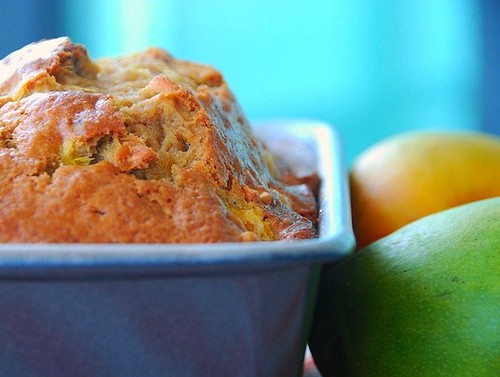
mango bread pan

This may just be the perfect breakfast bread.

It's a tweaked version of Dorie Greenspan's (Baking: From My Home to Yours) dense, fruit studded mango bread. It's so good that it may even surpass my beloved Banana Bread with Toasted Coconut and Almonds. And that's saying something.

I first made it last winter when we had relatives visiting. It was polished off in two days, and there were only four of us. I have made it several times since, and it has consistently received stellar reviews. It's on my "go-to list" of recipes and will surely be on yours too once you try it.
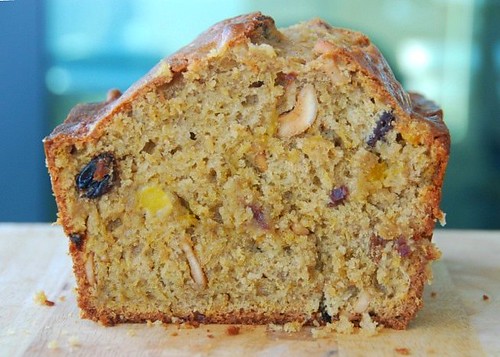
mango bread loaf slice

What makes this mango bread so delicious? Creamy mango, chewy raisins, aromatic ginger, and crunchy cashews to start. It's a satisfyingly moist, highly textured, aromatic bread with just the right sweetness. The only hard part is stirring the batter which is stunningly thick. You think to yourself, this will never cook, but it does, perfectly, every time.

This mango bread tastes even better after it sits a day or two. So eat it plain, toast it with butter, or top it with tangy apricot marmalade. Any way you slice it, it's delightful.
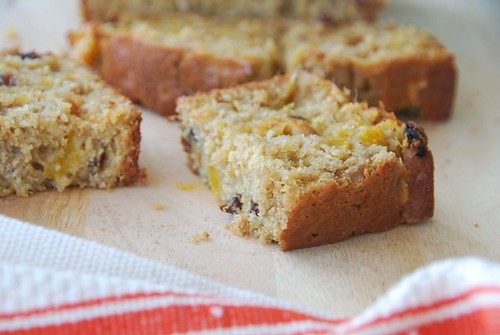
mango bread slices

Mango Bread with Raisins and Cashews
Serves 8-10
Print recipe only here.

3 large eggs
3/4 cup canola oil
2 1/2 cups all-purpose flour
1 cup sugar
1/2 cup light brown sugar
1 teaspoon baking powder
1 teaspoon baking soda
1 teaspoon ground cinnamon
1/2 teaspoon nutmeg
1/4 teaspoon salt
2 teaspoons grated fresh ginger
2 cups diced fresh mango
3/4 cup moist, plump mixed raisins, coarsely chopped
3/4 cup cashews, coarsely chopped
grated zest of 1 lime

Center a rack in the oven and preheat to 350 degrees F. Spray an 8 1/2- x- 4 1/2- inch loaf pan with cooking spray. Place the pan on two regular baking sheets stacked one on top of the other to prevent the bottom of the bread from over baking.

In a small bowl, whisk together the eggs and oil.

In a large bowl, whisk together the flour, sugars, baking powder, baking soda, cinnamon, nutmeg, and salt. Pour the wet ingredients over the dry, and using a spatula, mix until well blended. The dough will be very thick, but as Dorie says, "persevere, it will come together." Stir in the ginger, mango, raisins, cashews, and lime zest. Scrape the batter into the pan, and smooth the top with a rubber spatula.

Bake the bread for 1 hour 15 min. to 1 hour 30 min., or until the top is golden brown and a cake tester or thin knife inserted into the center comes out clean. (If the bread is getting too brown on top, cover it loosely with a tinfoil tent). Transfer the pan to a rack and cool for 5 minutes before running a knife around the sides of the pan and unmolding. Invert and cool to room temperature right side up on the rack.

You might also like these breakfast and brunch recipes:

Chestnut Pancakes with Pancetta, Creme Fraiche, and Cinnamon Maple Syrup


Doughboys


Banana, Coconut, and Medjool Date Bread


Breakfast Egg Sandwich with Avocado and Chipotle-Mayo


Check out more mango bread recipes from Chris and Sweet Mary.

Save This Page on Del.icio.us

Thursday, June 19

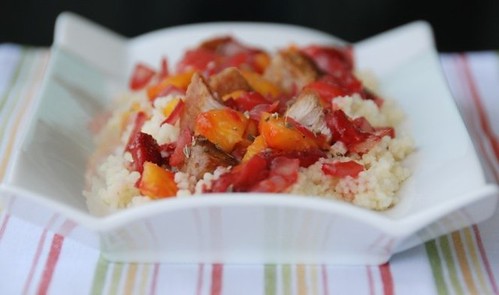
Pork Tenderloin with Strawberry-Mango Salsa

pork strawberry salsa

Strawberry season is in full swing across most of the country, so chances are you're buying lots of them. You are, aren't you? Then that also means you likely have a few soft or slightly bruised berries -- good enough to eat but not pristine enough to showcase on the top of a strawberry shortcake.

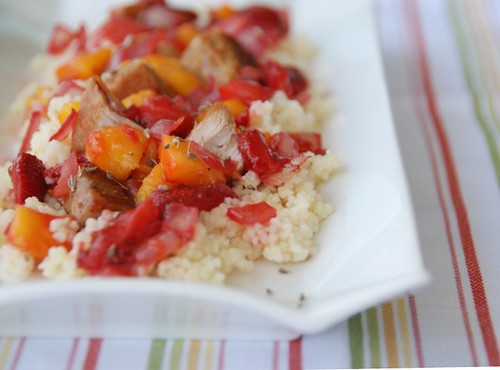
Well I'm not going to suggest you use them to make sweet jam or a smoothie (though I love both). I'm going savory with strawberries. That's right. If you've never paired strawberries with meat, then expect to be wowed. Succulent strawberries and creamy mango are enhanced with aromatic anise seed in this simple yet flavorful salsa. The fruits' sweetness provides the perfect balance to the savory, buttery flavor of the pork tenderloin.

I hope Jeanne of Cook Sister! likes savory strawberries because this is my entry for this month's WTSIM: Berried Treasure.

pork strawberry salsa cut


Pork Tenderloin with Strawberry-Mango Salsa
Serves 4
Print recipe only here.

Pork:
1 1/4 pound pork tenderloin
Salt and pepper
2 teaspoons olive oil
2 teaspoons butter

Salsa:
1 tablespoon butter
1 cup sweet onion, such as Vidalia
1 teaspoon anise seed
1 cup diced mango
2 cups chopped strawberries
salt and freshly ground back pepper, to taste
2 cups cooked grain of your choice, such as cous-cous, quinoa, or white rice.

Cut the tenderloin into medallions, and season with salt and pepper. Let stand for about 10 minutes.

Meanwhile, for the salsa, melt butter in a large skillet over medium heat. Saute the sweet onion for 3-4 minutes, or until slightly softened and browned. Stir in the anise seed and diced mango, cooking for 2 minutes more. Add strawberries and cook 2-3 minutes, until slightly softened. Season with salt and pepper. Remove from heat.

In a large skillet over medium-high heat, melt 2 teaspoons olive oil and 2 teaspoons butter. Add the pork; cook for 3-4 minutes, until crispy and browned, then flip and cook until browned all over and just cooked through (the meat should be tender).

Place cooked grain on a platter, add cooked pork, and cover with warm fruit salsa. Serve immediately.

Other meat dishes you might like:

Lamb Kebabs


Savory Sausage and Fennel Galette


Broccoli Rabe (Rapini) and Sausage Sandwich with Sharp Provolone


Save This Page on Del.icio.us

Monday, May 7

You Can Make a Lot of Salsa with a Case of Mangoes

If you’re familiar with my blog, then you know I love farmers’ markets. A week without a trip to the farmers' market is like a week without the sun: it makes me grumpy. I can’t remember the last time I bought produce in a regular grocery store. Sure, I go to the supermarket for eggs, milk, and cereal, but fruits and vegetables come from the farmers. So, what I did other day, shocked me. I tell myself it a was just a transgression.

I was at Costco stocking up on bottled water, protein powder, and toilet paper (why two people need 36 rolls of Northern toilet tissue, I’ll never know). On my way to the protein powder, I passed pineapples, tall, fragrant, ripe pineapples each topped with a crown fit for a king. They had no brown spots, no fuzzy fur on the bottoms—they were perfect. Better yet, they were only $2.99 each. I couldn’t believe it! I put two in my carriage and buried them under the toilet paper.

Not 20 feet later on my way to the water, I passed a mountain of mangoes, whose green and yellow skins were taut and unblemished. Having just paid $1.75 each for some (which weren’t even good), I stopped to check the price -- $8 for a whole case! I debated whether or not to buy them. What would we do with a whole case of mangoes? Would they be sweet? What if they all ripened at the same time? Then I heard my father’s voice in my head saying, “Buy them! They won’t go to waste." “But Dad, it’s only the two of us.” “Just buy them!” the voice echoed. After scanning left and right, I picked up a case and placed it in the carriage. What did I think? That the Farm Bureau was watching me on the surveillance camera? Feeling guilty, I wondered if the toilet paper could cover these too.

When Jeff came home from work that night, he saw the behemoth bowl of mangoes and pineapples on the counter and asked, "Costco?" "Costco," I replied.

That night we enjoyed a pineapple-mango salsa on swordfish for Jeff and tofu for me. Fruit salsas are a staple in our house because they're light, healthy, and versatile. This salsa is sweet, spicy, and tangy and tastes even better when allowed to rest at room temperature before serving. Also, the rich golden yellow of both fruits seemed just right to submit to Barbara's A Taste of Yellow event at the famed Winos and Foodies. In addition to raising awareness of cancer, Barbara's event has been approved by the Lance Armstrong Foundation as an official LIVESTRONG Day Event.

Swordfish with Pineapple-Mango Salsa
Print recipe only here.

1 cup fresh pineapple, diced
¾ cup mango, diced
1 small red or green chile, finely diced
3 Tbsp green onions, finely sliced
Juice of ½ lime
1 Tbsp fresh mint, finely chopped
1 Tbsp fresh cilantro, finely chopped
Salt, to taste

2 (4-oz) swordfish steaks or mahi-mahi
1 tsp olive oil
Salt and pepper

For the salsa, simply place all ingredients in a bowl; allow to rest for at least 45 min- 1 hr. so the flavors will mingle.

Preheat the broiler. Drizzle the olive oil on both sides of the swordfish, and season with salt and pepper. Broil for 4-5 minutes, flip over steaks, and broil another 4-5 minutes, or until opaque. Alternatively, you can grill the swordfish or pan fry on the stovetop. Makes 2 servings.

Serving suggestion: steamed sugar snap peas lightly seasoned with extra virgin olive oil, fresh mint, & salt and pepper are a lovely side vegetable.

If you're unfamiliar with selecting and cutting a mango, then check out Rachel’s tutorial at Coconut and Lime.


Save This Page on Del.icio.us

Saturday, January 20

Q:"What happened to your neck?" A:"Polenta."


My mom loves to tell this story. One day she went to visit her friend Dee. When Dee opened the door, my mom immediately noticed a half-dollar sized, bright red mark on Dee’s neck. Concerned, she asked her, “What happened?” Gingerly touching the area, Dee answered in one word, “Polenta.”

If you’ve ever made polenta, then you understand. When it boils, it takes on an bubbling lava-like behavior. When the bubbles burst they make a mess of your stovetop (and if you’re not careful a mess of you too). Despite these bodily risks, I make polenta all the time. I typically use regular polenta, but the quick-cooking kind is often not bad. Although heretical to some chefs, I do not cook my polenta for one or two hours; rather, I cook it for about 30 minutes. In his cookbook, “Jamie’s Italy,” Jamie Oliver (whom I have a culinary crush on) says he cooks it for 40-45 minutes; I've done that too. Just be sure that the polenta has absorbed the liquid and has become thick. That’s when it’s done.

Polenta is one of the classic Italian "peasant dishes." Growing up, we often ate it with a simple marinara sauce and grated cheese. It's wonderfully versatile though. You can make it soft and creamy or so firm that you can cut it into slices and sautée until crispy. It can made with just water or a mixture of water and milk, like I did here (it comes a bit creamier that way). The fruit salsa is adapted from an original recipe in Cooking Light. I used Satsuma tangerines (pictured on the tree next to my apartment here) because they're in season. After reading a wonderful blog at Smitten Kitchen, I realize that some people really don't like cilantro; if you're one of them, just omit it or substitute with mint.

Fiery Shrimp with Avocado-Pomegranate-Tangerine
Salsa served over Soft Polenta
Print recipe only here.

SALSA:
1 small Hass avocado, diced
1 Satsuma tangerine or other tangerine
¼ cup pomegranate seeds
1 tsp lime juice
1-2 scallions, thinly sliced
1 tsp honey
½ small jalapeno, de-seeded (omit if the heat in the shrimp is enough for you)
½ tsp fresh grated ginger
1-2 Tbsp each of cilantro and basil
Salt, to taste

SHRIMP:
1 Tbsp canola oil
14-16 extra large shrimp, peeled and deveined
½ small jalapeno, with seeds (why else would I call it “fiery”?)
1-2 tsp lime juice
A pinch of lime zest
A pinch of salt

POLENTA:
½ cup yellow polenta
1 cup water
1 cup fat-free milk*
1 tsp butter
Salt and pepper, to taste

To prepare the polenta, simply combine the water, milk, butter, and salt in a medium saucepan and bring to a boil. Slowly pour in the polenta, whisking all the while. The polenta will start to bubble and spit pretty quickly. When it does, place a cover on it leaving a little space for the air to escape; reduce heat to a low simmer, and stir every few minutes, making sure to scrape the pan so the polenta doesn’t stick. After about 10 minutes, add some more water and stir to keep the polenta from becoming too dry. Cook another 15-20 minutes or until the consistency is thick and creamy; Jamie says it should “lollop off the end of a spoon.” Most chefs add butter to it at this point, but for this recipe, I find it too rich. It’s up to you.

To prepare the salsa, simply mix all of the ingredients in a bowl and toss gently to coat.

To prepare the shrimp, mix the cleaned shrimp with the remaining ingredients. Heat the oil in a skillet over medium-high heat. Add the shrimp and sauté for 5-7 minutes, turning to ensure that they brown nicely on both sides.

To serve, plate the polenta; add the shrimp and salsa; garnish with cilantro and basil. This makes 2 servings.

*TWO MORE CENTS: I actually have to use Lactaid milk which works fine. Also, I eat mine with tofu instead of shrimp.

Care of polenta injuries: According to my husband Jeff (who has just 5 months left of his Dermatology residency), if you develop a blister, do not pop it. This increases the risk of infection. If the blister becomes intolerable, however, then use a sterile needle to punch a small hole and let the blister collapse back on the wound. (Four years of medical school and four years of residency to learn that).

Note: Food Blogga is not meant to diagnose or cure any diseases caused by careless cooking. If you are injured by polenta, consider dialing 911 and purchasing cover up make-up.