Showing posts with label crostini. Show all posts

Thursday, April 10

A Fava Bean by Any Other Name Would Taste as Good

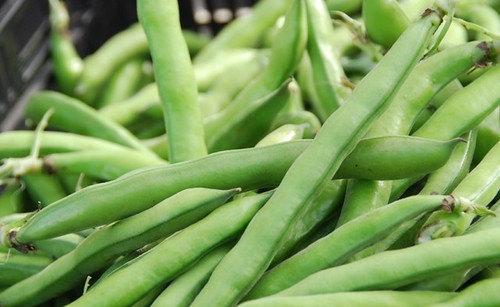
fava beans at the farmers' market

Finally, the wait is over! Fava beans are in season. They appeared for the first time last Sunday, and I couldn't be happier. I know how hard the wait has been on you too, but you can rest easy now. Well don't rest too easily. Fava beans have a depressingly short season--usually just 4-5 weeks in April-May.

Fava (FAH vah) beans, like artichokes, asparagus, and English peas are a hallmark of spring time produce. These meaty, chewy legumes are exceptionally flavorful; they're similar in taste to edamame and have the firm texture of lima/butter beans. In general, the larger the pod, the better the bean. So when you see them, buy them, even if they're $3.00-4.00/pound. You won't be disappointed.

And don't worry about what to call them. According to Wiki and Cook's Thesaurus, you're correct if you say Vicia faba, broad bean, butter bean, faba bean, English bean, field bean, horse bean, tic bean, or Winsdor bean. I'm not making this up. I think someone actually wrote a dissertation entitled "The Many Appellations of the Bean, Fava."

So call 'em whatever you want, just don't miss them. And follow these instructions for shelling. They take a little effort because you have to shell them twice, but trust me, they're worth it.
  1. Snap the top off of the pod. Sometimes the pod will split easily down the seam, but sometimes you have to squeeze and twist the pod with your fingers till it pops and the beans are exposed.
  2. Remove the beans and discard the shells.
  3. Now you need to remove the waxy casing that encloses the fava bean. The easiest way is to boil the beans for 2 minutes, then drain them, and plunge in a bowl of ice water. Now for the fun part-- squeeze the casing gently between your thumb and forefinger and watch the fava bean pop out! Discard the waxy shell.
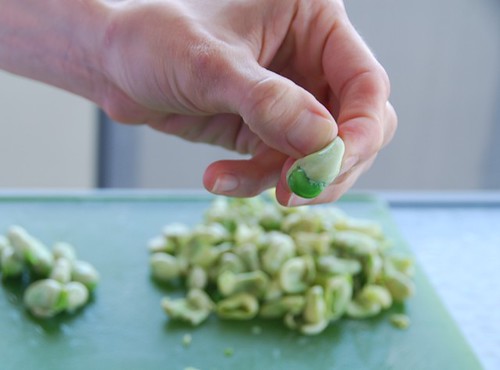
fava bean being shelled

Now it's time to eat them, and you can eat a lot of them. A 1/2 cup of boiled fava beans is just over 90 calories and contains nearly 7 grams of protein and 5 grams of dietary fiber. They're high in calcium, iron, and folate. So enjoy them in salads, soups, pastas, and risottos. Or mash 'em up in spreads and dips.
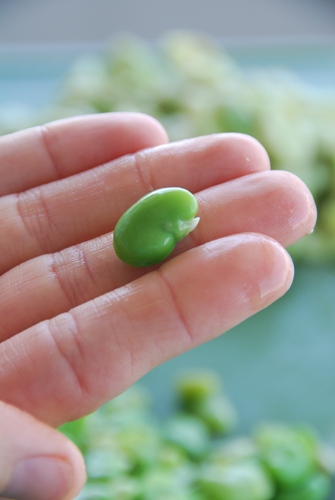
fava bean in my hand

I'm sending this recipe to Jai and Bee of Jugalbandi, the hosts of this week's Weekend Herb Blogging created by Kalyn of Kalyn's Kitchen.
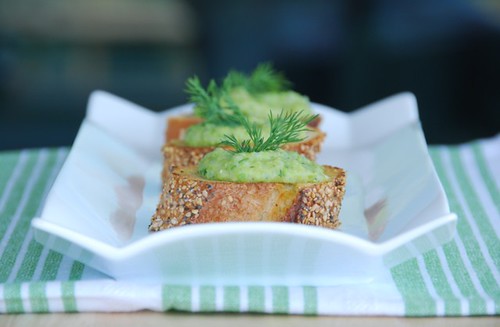
fava bean and dill crostini

Fava Bean and Dill Crostini
Yields 3/4-1 cup
Print recipe only here.

3/4 cup shelled fava beans (about 1-1 1/4 pounds fresh fava beans in the shell)
1/2 cup red potato, diced
1 tablespoon plus 1 teaspoon Meyer lemon juice
1 tablespoon extra virgin olive oil
7-8 cranks black pepper
3 tablespoons fresh minced dill
2 tablespoons grated Reggiano-Parmigiano cheese
4 tablespoons water, or as needed
salt, to taste

1 baguette

Boil the fava beans in a small pot for 2-3 minutes; drain, and plunge into a bowl of ice water.

Meanwhile in a small pot, boil potatoes for 10 minutes, or until tender when pierced with a fork. Drain and let cool. Squeeze the casing gently between your thumb and forefinger and watch the fava bean pop out! Discard the waxy shells.

Place fava beans, potatoes, and remaining ingredients in a food processor and process until smooth. Use less water for a chunkier spread and more water for a smoother spread.

Toast bread slices. Spread bean mixture on toasts. Sprinkle with some sea salt, drizzle with some extra virgin oil oil, and top each with a sprig of fresh dill.

Note: If you can't find fava beans, then I suggest substituting lima/butter beans or edamame. I have also made this spread with fresh shelled English peas and fresh shelled sugar snap peas which are equally delicious.

You might also like:

Save This Page on Del.icio.us

Thursday, January 31

What's the Difference Between Bruschetta and Crostini?

Bruschetta and crostini? What's the difference?

They’re both wildly popular, easy-to-make Italian appetizers of toasted bread with toppings.

However, when the sweet Shn of Mishmash! asked me about this a while back, I really had to think about it.

In my family, bruschetta was toasted bread rubbed with garlic and topped with olive oil, tomatoes, and basil, while smaller slices of toasted bread with various toppings were called crostini.

I wanted to provide you with a more thorough explanation of the difference between the two, so I explained to Jeff that we needed to take a trip to Italy to conduct research for my blog. We were all packed to go until Bernanke cut the fed two more bits yesterday thereby dropping the dollar further against the Euro, quashing our plans. So instead I just Googled it.

Brushcetta, from the Italian "bruscare," which means "to roast over coals," refers to the bread, not the toppings. Rather large slices of bread are grilled, rubbed with garlic, then drizzled with olive oil. They are usually topped with tomatoes and basil, though other toppings from meats to vegetables can be used.

Crostini, "little toasts," are thinner, smaller slices of bread (usually from a baguette) that are always toasted then piled with various toppings, such as vegetables, savory spreads, and cheeses.

Honestly, technicalities beyond that just aren't important. If it’s crispy bread toasted with olive oil and piled with savory toppings and cheese, just call it “irresistible.” Then make some for the next party you're going to where everyone will love you for it.

That’s why I'm bringing my Roasted Pepper, Olive, and Brie Bruschetta (not crostini -- did you see the size of those bread slices?) to lovely Mansi’s Game Night party. This is a fast, easy, and vegetarian recipe, which is just what Mansi wants. With garlicky roasted peppers, salty olives, and creamy Brie cheese, this is flavorful, classy bruschetta that takes 15 minutes to make.

What's your favorite way to make
bruschetta or crostini?


Roasted Pepper, Olive, and Brie Bruschetta

Print recipe only here.

Topping:
2 1/2 tablespoons extra virgin olive oil
1 cup minced cured olives, such as Kalamata and Cerignola
1 cup bottled roasted red and yellow peppers (thinly sliced or diced)
2 tablespoons minced fresh parsley
2 tsp crushed red pepper flakes

8-10 ounces of soft Brie cheese, sliced, or 1 ounce per slice of bread
2 tablespoons pine nuts, toasted
extra chopped fresh parsley, optional garnish

Bruschetta:
1 loaf of crusty Italian bread, such as Ciabatta sliced into 8-10 thick slices
1 whole garlic clove, paper removed
4-5 teaspoons of extra virgin olive oil (about 1/2 teaspoon per slice)

To toast the pinenuts, place in a dry skillet over medium heat. Gently shake the pan handle to ensure even toasting, for about 1 minute, or until golden brown. Remove and set aside.

In a small bowl, combine olive oil, olives, roasted peppers, parsley, and red pepper flakes. Stir until well combined. (This topping can be made up to a day or two in advance and placed in an air-tight container in the refrigerator. Bring to room temperature before applying to bruschetta.)

Grill bread slices on an outdoor grill (or on a grill pan indoors, like I did) until lightly charred and crispy. You could also place them under the broiler. Rub each toasted slice with the raw garlic clove and drizzle with a teaspoon of olive oil.

While the bread is still warm, top with brie then olive mixture. Sprinkle with toasted pine nuts and extra chopped parsley, if desired, and serve immediately.

Vegetarians, please avert your eyes.

When I made this bruschetta, I served it with shrimp for added protein (and because Jeff loves shrimp). It makes a fast and easy mid-week dinner.

Serves 2

2 teaspoons olive oil
12-14 jumbo shrimp, deveined and cleaned
the juice of 1/2 a lemon (about 2 teaspoons)
season with salt and freshly ground black pepper
1 teaspoon finely chopped fresh parsley, optional
extra virgin olive oil, for drizzling

In a large skillet over medium heat, add oil. Once warm, add shrimp, and saute for 5-7 minutes, turning shrimp once or twice until opaque and crispy. When almost finished, season with lemon juice, salt and freshly ground black pepper. Place shrimp on a plate, drizzle with extra virgin olive oil, and sprinkle with finely chopped fresh parsley, if desired.


You might also like:
Spinach, Nutmeg, and Ricotta Calzones
Watercress, Seckel Pear, and Brie Salad
Mediterranean Jacket Potatoes
Homemade Pizza with Fennel Sausage and Rapini

Other bruschetta posts you might like:
All about bruschetta from Chickspeak.
Pear and Squash Bruschetta from Chef Mark Porcaro, featured on Pear Panache.

Save This Page on Del.icio.us